


Lambing- Watery Mouth Disease (WMD)
Watery Mouth Disease (WMD) can cause severe losses to lambs and is an important bacterial disease of the neonatal lamb. It is especially common within intensive indoor situations, such as lambing sheds and pens. It affects lambs between 6- 48 hours old, with mortality reaching up to 83% of lambs infected.
There are many factors that contribute to the onset of WMD, however, an environment with a high bacterial challenge and inadequate intake of colostrum has a significant impact on the development of watery mouth in the new born lamb. Typically ingestion of the bacteria occurs whilst seeking their mother’s udder, when sucking at her soiled fleece or soiled bedding.
What is watery mouth?

Watery mouth is caused by pathogenic strains of Escherichia coli (E.coli). The bacteria colonise in the small intestine of the lamb after ingestion and multiply rapidly. When the E.coli bacteria die, they produce endotoxins, which, in large quantities, begins to suppress intestinal movements. This in turn allows further development and multiplication of the bacteria and further endotoxin production.
The toxins produced are also absorbed in to the circulatory system where they pass through the liver. If toxin levels become high, they can cause severe liver damage, resulting in endotoxemia. It is this that produces the clinical signs of watery mouth.
Lambs that have a low birth weight, a difficult lambing, or are twins/triplets are most at risk, yet ewes that have a poor body condition or have been ill in the lead up to parturition will give birth to lambs that are also susceptible to the disease. New born lambs don’t have an acidic environment in their stomach to destroy the bacteria. Conversely older lambs with well-established stomachs are less susceptible to WMD.
Clinical signs
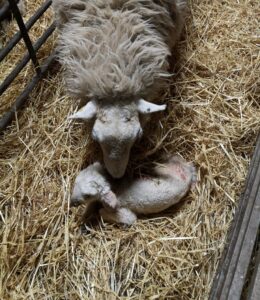
Lambs will appear dull and lethargic with a reluctance to move or feed. Within the next few hours the abdomen area becomes distended as it fills with gases (also known as ‘rattle belly’) and the lamb will begin salivating which is where the name ‘watery mouth’ is derived.
Lambs may also have tucked up appearance, constipation or sometimes diarrhoea. The onset of this disease is quick and the condition of the lamb can deteriorate within only a few hours to a coma and subsequent death.
Preventative measures
The first line of defense for the prevention of WMD is an adequate amount of good quality colostrum which provides the lamb with a level of immunity as well as other health benefits; ewe health before parturition is of great importance, especially those carrying twins or triplets. For adequate good quality colostrum to be produced, the ewe must remain in good condition and particular attention should be paid to those in poorer condition and feed intake adjusted accordingly.
Read here for more information about the importance of colostrum and alternatives.
The second line of defence for the prevention of WMD is good hygiene in and around the lambing areas and associated equipment – ideally ewes should be dagged before lambing begins as this reduces disease challenge and minimises the chances of ‘clean’ pens becoming infective – this will also protect the ewe from contracting bacterial infections whilst lambing. Lambing pens should be cleaned out and disinfected regularly, (ideally after each ewe and lamb/s has been moved out of the lambing pen) and bedding should be replaced with fresh, clean, dry straw. All equipment should also be cleaned and disinfected before the next ewe uses the pen.
The use of antibiotics as a preventative for watery mouth in lambs is no longer justifiable due to the rise in antibiotic resistance. Through adequate ewe nutrition before parturition, to ensure a good quality/yield of colostrum as well as good mothering and hygiene measures, watery mouth is largely preventable.
However, should an outbreak occur, veterinary advice should be sought.
Book References
- Winter, A. and Phythian, C., 2011. Sheep health, husbandry and disease.
- Winklemann, J., 2022. Sheep and Goat Diseases Veterinary book for Farmers and Smallholders. 4th ed. 5m publishing.