Ridgeway Research News

This is the main category that all Ridgeway News is posted to.

FEC: What is a faecal egg count and why should I use it?

What is a FEC? Faecal Egg Counts, also known as FEC, WEC or EPG count assesses the worm burden within an animal. A FEC does what it says on the tin – a technician will look at the faeces and literally count the number of eggs in a set amount of the faeces. This is then taken as a representative for the burden of the animal. Results are typically presented in EPG or eggs per gram, allowing you to compare…

0
Read More
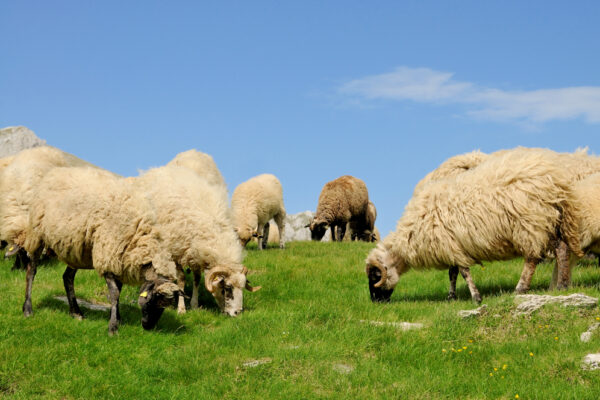
Nematodirosis in Lambs

Nematodirosis in Lambs What is Nematodirus? Nematodirus spp. are thread-like roundworms that infect the small intestine and cause nematodirosis in lambs, goats and occasionally cattle. Nematodirus spp. infection largely affects lambs in springtime as adult sheep develop a natural resistance to the infection. Due to its unique development and life cycle, a phenomenon known as the spring flush can occur. Three species of Nematodirus spp. can affect sheep, with N. battus as the most pathogenic. Other species are N. filicollis…

0
Read More

Foot and Mouth Disease: The UK Outbreak of 2001

What is foot-and-mouth disease? In 2001 the UK went through an epidemic of foot-and-mouth disease (FMD) which led to the slaughter of 6.5 million animals and a cost of £8 billion.1 What have we learned from it, and what has changed to stop it from happening again? Foot-and-mouth disease is a viral disease of cloven-hoofed animals such as sheep, pigs and cattle. It is present all over the world and has had a large impact on agriculture for many years.…

0
Read More
Clostridial diseases can seriously damage sheep flocks.

Clostridial Diseases in Sheep

Clostridial Diseases in Sheep What are Clostridial Diseases? Clostridial diseases are a group of severe diseases seen in sheep caused by Clostridia spp. bacteria. These bacteria are known to be pathogens in livestock, humans, and companion animals. They can survive in spore form in the environment for long periods of time and so are very dangerous. The primary source of infections picked up from the environment is faecal contamination of pasture. At the same time, it is normal for many of these bacteria…

0
Read More
cattle_cow_lice_winter

Lice infestations in Cattle and Sheep: Indoor Winter Housing

Lice infestations in Cattle and Sheep: Indoor Winter Housing What are lice? Lice are ectoparasites that live permanently on their host. They either feed off blood meals or on the skin, hair, fleece or any other debris on the skin.  These are named sucking or chewing lice, respectively. Bovicola ovis and Bovicola bovis are chewing lice which are found on sheep and cattle, respectively. In the UK, three species of sucking lice commonly affect cattle — Linognathus vituli, Solenopotes capillatus, Haematopinus eurysternus…

0
Read More

Sheep Scab and Psoroptes ovis

What is Sheep Scab? Sheep scab is a endemic disease caused by Psoroptes ovis, more commonly known as scab mites. Scab mites defecate on the skin which causes an allergic reaction. With a short life cycle of only 14 days, scab mite populations can increase fast and can infect an entire flock. Even more so when kept indoors and in close proximity. The mite can survive for up to 17 days off the sheep, but needs a sheep to complete its…

0
Read More

Happy New Year: A round up of all of the parasites we have seen this year

Happy New Year: A round up of all of the parasites we have seen this year We’ve been lucky enough to see quite a range of parasites at Ridgeway this year, including some new ones and some that we’ve encountered many times. We thought we would share a few of these with you to sum up some of our work this year. We look forward to seeing what new and exciting species 2021 brings us! Dictyocaulus filaria A new parasite…

0
Read More

Christmas 2020: the perfect opportunity to nurture your mental health and take time for yourself after the strangest of years

Christmas 2020: the perfect opportunity to nurture your mental health and take time for yourself after the strangest of years Who would have thought that 2020 would bring us a global pandemic and very altered day-to-day life as we know it? Why didn’t Doc from Back to the Future warn us just to skip 2020 altogether? Jokes aside, it’s been a really tough year for everyone. Whether that’s been from lack of work, working extra hours, becoming ill or feeling…

0
Read More

Cystic Ovarian Disease

Infertility in Cows: Cystic Ovarian Disease What is Cystic Ovarian Disease in cattle? Cystic ovarian disease (COD) is a major problem associated with poor fertility in dairy cattle. Reportedly, from 6 to 19% of dairy cows develop cysts. It is possible, however, that the incidence of the disease is as high as 60%, as many heifers recover without intervention1, meaning they may go undetected. It is characterised by the presence of at least one enlarged anovulatory follicle on one or…

0
Read More