


Flystrike in Sheep
Flystrike is the invasion of animal tissue by the larvae of flies. The most common flies that cause flystrike are greenbottles, bluebottles and blackbottles. Greenbottles are considered primary flies and initiate strike on sheep with open wounds or soiled fleece. Once these primary flies have struck the animal bluebottles and blackbottles will attack the already damaged areas. Flystrike is a major welfare concern in the UK with 1.5% (~229500) of ewes and 3% (~495000) of lambs being affected every year. At least 75% of all sheep farms report flystrike per year.
Flystrike is most commonly observed in the summer months but can occur at other times of the year. The life cycle can be completed in as little as 10 days, from egg to adult fly. This results in flystrike developing rapidly and causing animal welfare issues quickly. Maggots develop in around 3 days after the eggs have been deposited by an adult female fly. The maggots actively feed on the sheep’s skin and muscle causing damage with the aid of enzymes. This in turn attracts more flies due to the smell of rotting tissues. As the sheep’s tissues become damaged by the maggot infestation the sheep’s tissues secrete toxins which pass into the animal’s bloodstream and cause illness and potentially death. There are often high instances of bacterial infections associated with attacks.
One main and serious issue surrounding this behaviour is when the flies are attracted to foot lesions. This causes the issue to worsen and results in severe lameness and the inability to bear weight on the affected limb.
Foot lesions combined with flystrike causes increased welfare issues for the animal and death can occur in up to 5% if the animal is left untreated.
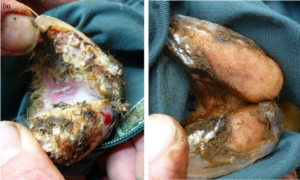
Figure 1: Foot rot lesion, prime site for flystrike. (adapted from Strobel et al., 2013).
Diagnosis of flystrike is often based on visual cues and inspection. Often a large number of flies are seen along with discoloured fleece, blackened skin and a rotten smell.
The main signs of include:
- Isolation from the rest of the flock
- Agitation and kicking or nibbling at affected area
- Discoloured wool
- Tissue decay
- Toxaemia
- Disturbed grazing
- Death
Animals are treated by manually removing the maggots, disinfecting the affected area and administration of antibiotics, fluids and NSAIDs as necessary. Insecticides are also often applied to prevent further flystrike occurring.
There are also preventative methods for flystrike, these include:
- Using the NADIS website for flystrike alerts
- Shearing ewes
- Control of parasites that cause diarrhoea to reduce fly attraction
- Dagging around tail area
- Pour-on formulations to inhibit larval growth eg – CliK, Crovect, Spotinor
- Correct and rapid disposal of carcases
- Rapid treatment of wounds and lesions
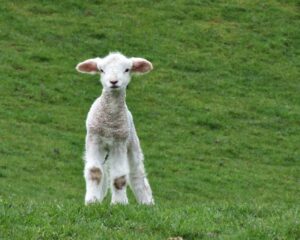
Figure 2: A healthy spring lamb.
For other some issues affecting lambs throughout the year, check here.